
Futa 蓋
My work as artist in residency at 224 Procelain以下に、この文章の日本語訳を掲載しています。
During my artist-in-residency at 224 porcelain, I noticed that my thoughts kept going back to one of my favourite subjects: lids (see my graduation project). During my journey through Japan I noticed some interesting preservation behaviours.
So, next to my “main project” (which you can find here), I decided to engage with these tiny observations and ideas. This “bonus project” became Futa (translated from Japanese: lid).
These are the 3 things I noticed:
1. The absence of leftover stacking
While travelling through Japan, I noticed that most people use clingfilm to cover their leftovers, before putting them in the fridge. In my home, the leftovers are instead stored in a ceramic bowl with an ill-fitting plate balancing on top. Sometimes these constructions are even balanced on top of each other, which creates a landscape of ceramic buildings inside the fridge. This always seemed normal to me, but while I explored many Japanese kitchens throughout the year, I never encountered this art of stacking ceramic dishes filled with leftovers. A shame, I thought. Although there is a risk of collapse, using existing dishes instead of a plastic foil is an easy way to reduce single-use plastic. (Sadly enough, single-use plastic seem to be covering almost everything here)
2. Bento behaviour
Japan is a true Bento country. Translated, the word “Bento” means lunch. And the Japanese residents have certainly mastered the art of bento. Lunchboxes with different compartments for different side dishes are stacked on top of each other, with an elastic band holding everything together. Soup-bento-boxes with thick thermowalls and waterproof lids are also not uncommon. Most bento boxes are carried around in a special bento-box-bag (complete with cute print). But, most bento boxes contain plastic...
During my artist residency in Ureshino, I often went to the park to eat my bento on the grass. While eating from my plastic lunchbox, I dreamed of a picnic with ceramic dishes, displaying many different side dishes. Isn’t it strange to eat my lunch from a metal or plastic box, as a ceramist? Is there a way to bring my favourite ceramics with me on my travels, and enjoy them on the road?
3. Piles of overproduction
During my daily walks through Yoshida (the little ceramic town), I often encountered piles of old ceramic plates, cups, teapots and bowls. The idea that I was designing new products while the products that were produced here were in (over)abundance. I felt a resistance to produce more of the same. More bowls, more plates, more cups. Instead, I thought, I want to make something that shines a light on the products that already exist or that another local ceramist creates. I want to make something in collaboration with local craftsmen and the piles on the streets. How?
With these observations dancing through my mind, I started making. Since my “main project” was all about making plates, I decided to stick to the theme and started to design plates. But instead of slipcasting the designs, I wanted to learn a new skill: throwing plates by hand on a clay throwing wheel.
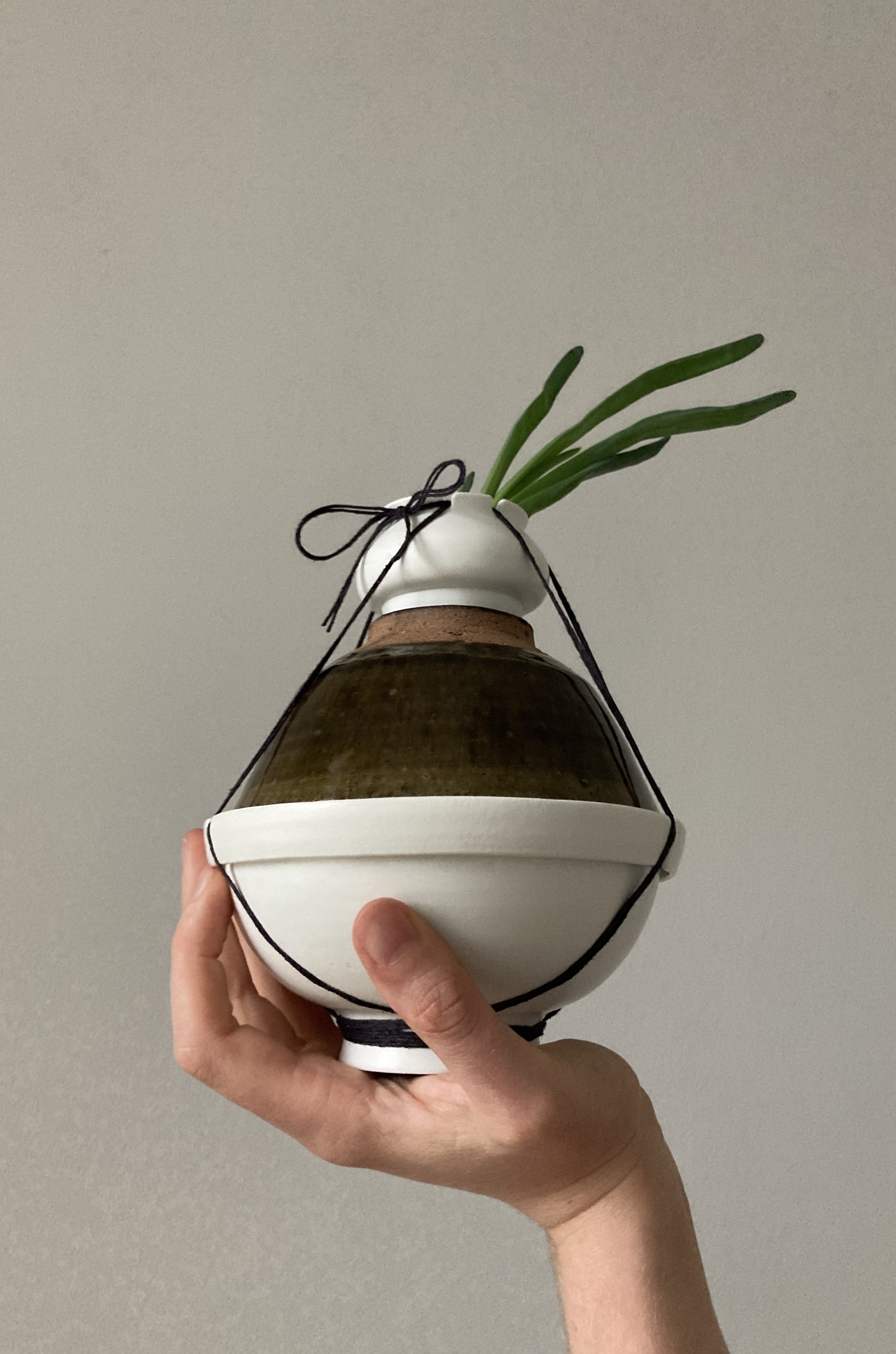
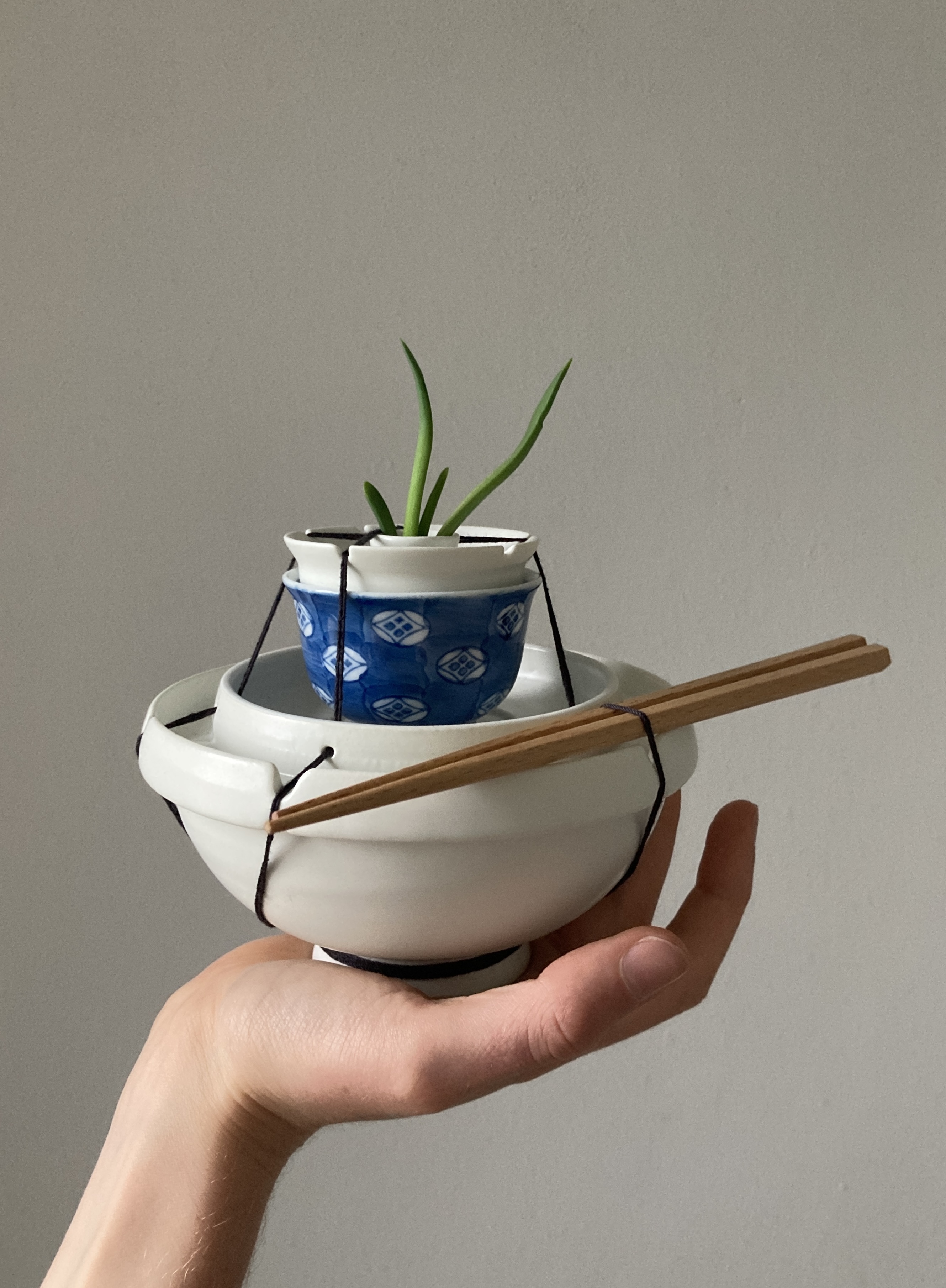
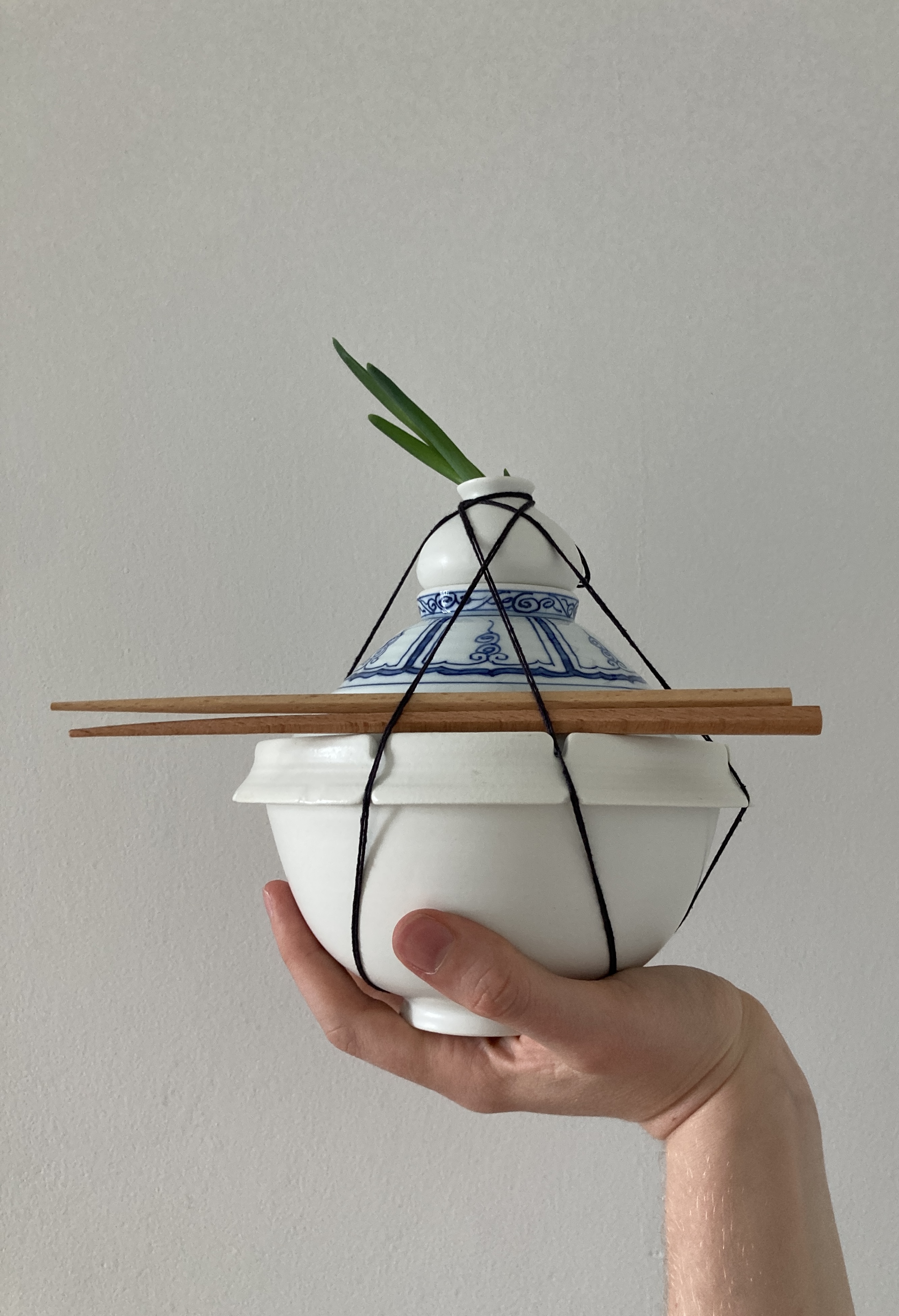
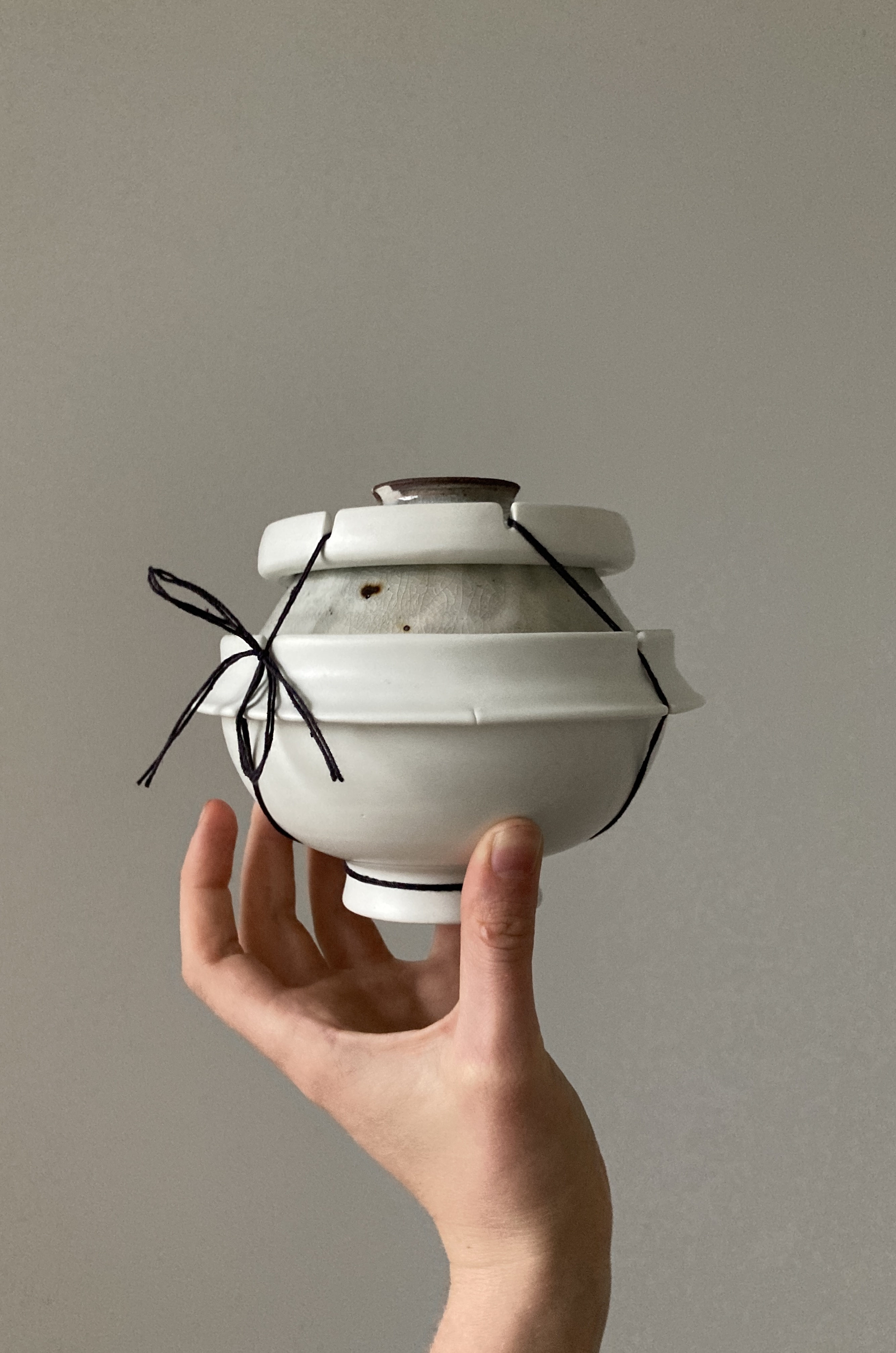
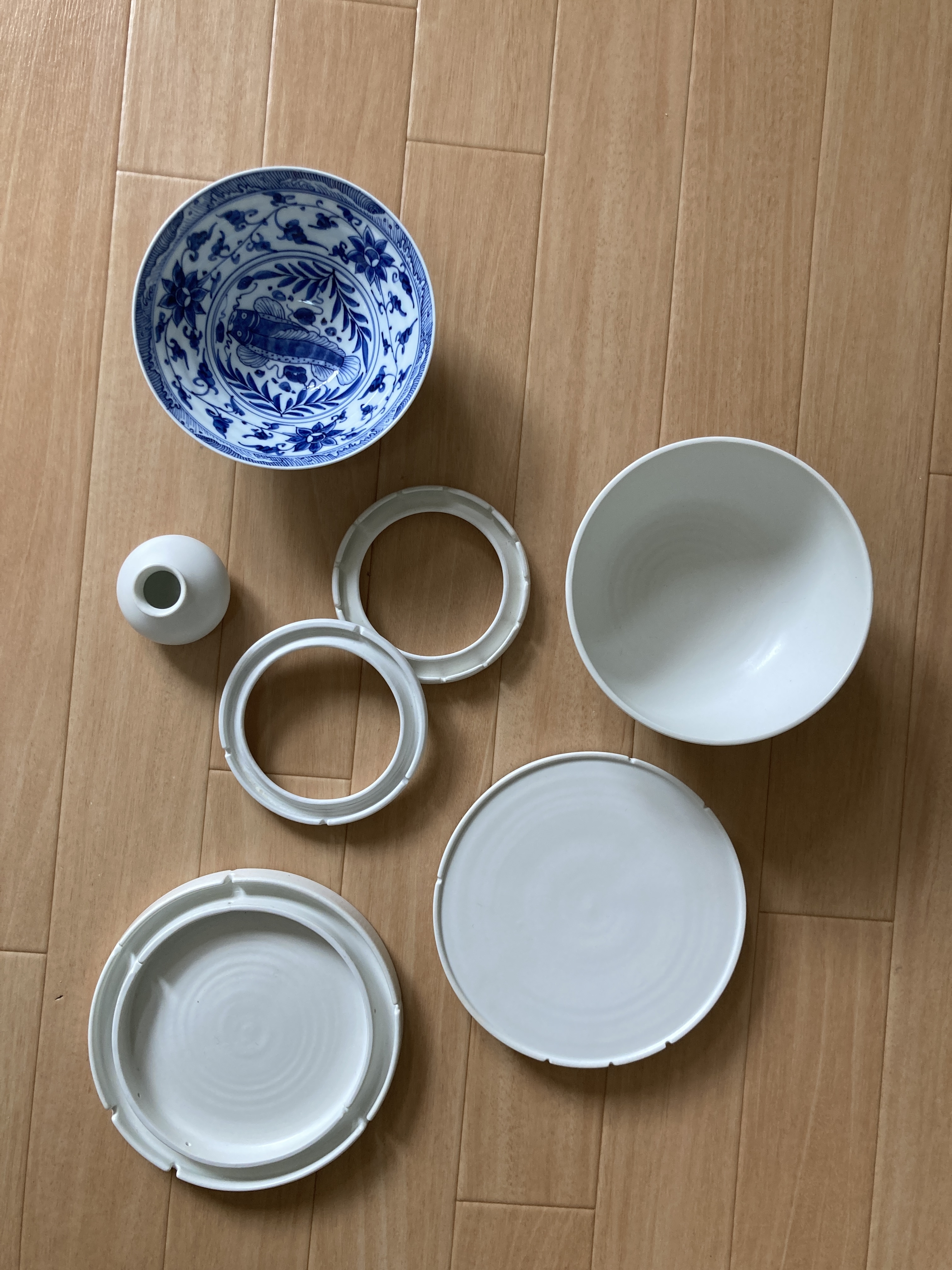
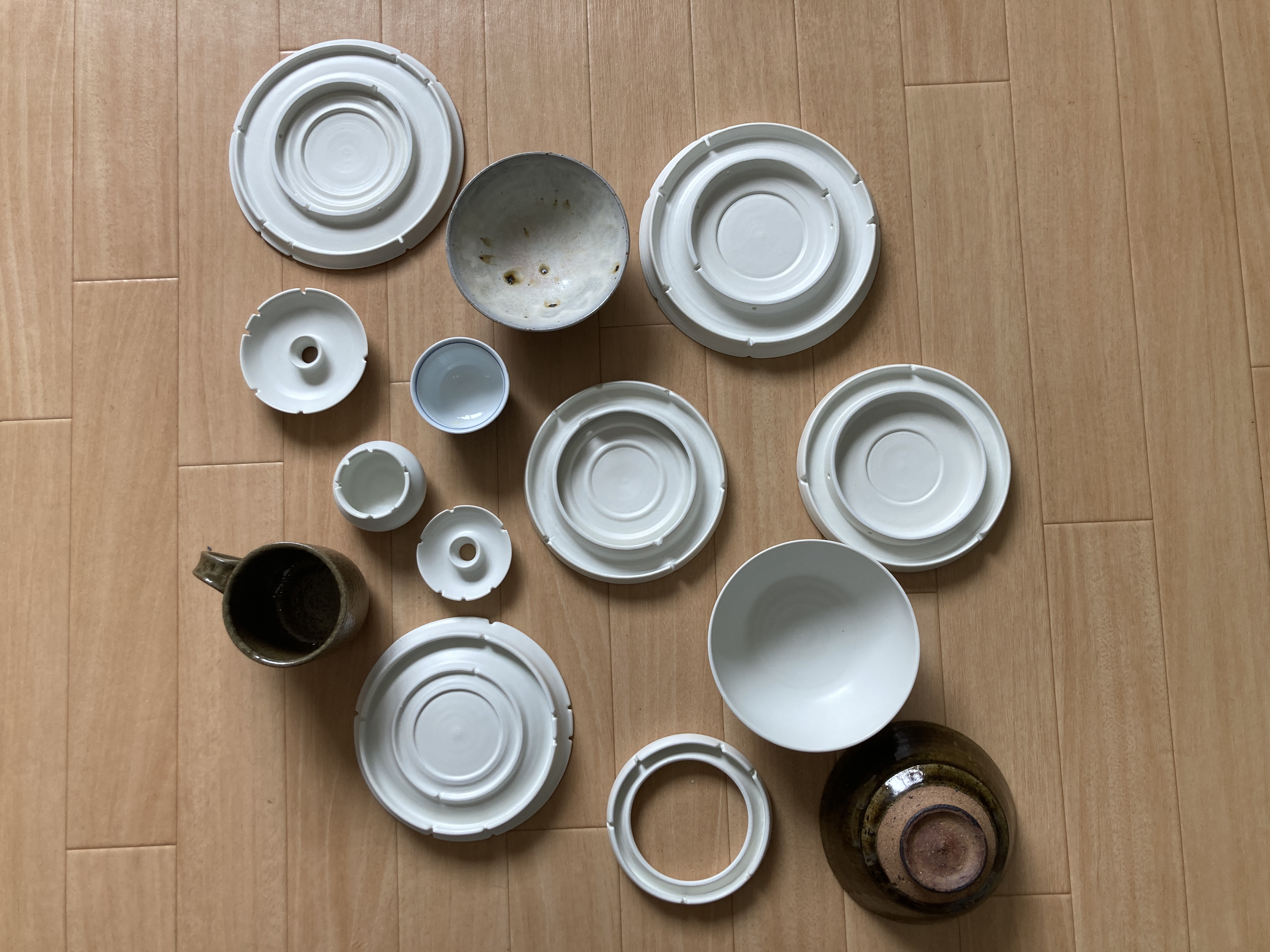
I ended up with many strange hand thrown plates that can function also as a lid when you want to store leftovers in the fridge. The lids fit on multiple sizes of bowls, and can be tied together by a rope. You can stack multiple dishes on top of each other and bring them out for a nice ceramic picnic. The plates are a simple matt-white, so all the attention goes to the used bowl.
In my dreams I want to sell these white plates as a set together with an existing bowl or in collaboration with another local craftsman.



蓋
224 porcelainでのアーティスト・イン・レジデンス期間中、私の思考は、大好きなテーマの一つで ある蓋(卒業制作をご覧ください)へと何度も戻っていきました。日本を旅する中で、興味深い保 存習慣をいくつか目にしました。
そこで、メインプロジェクト(こちらをご覧ください)の傍ら、これらの小さな観察やアイデアを形にす ることにしました。この「ボーナスプロジェクト」が「フタ」です。
私が気づいた3つの点は以下の通りです。
1. 残り物を積み重ねない
日本を旅する中で、ほとんどの人が残り物をラップで包んでから冷蔵庫に入れていること に気づきました。私の家では、残り物は陶器のボウルに入れ、その上に少し小さめの皿 を乗せて保存しています。時には、これらの器を積み重ねて、冷蔵庫の中に陶器の建物 が並ぶ風景を作り出していることもあります。私にとってはごく当たり前のことのように思 えましたが、この一年を通して多くの日本のキッチンを訪れたにもかかわらず、残り物を 詰めた陶器の皿を重ねるというこの習慣には一度も出会ったことがありませんでした。残 念だと思いました。崩れる危険性はあるものの、プラスチックのホイルの代わりに既存の 皿を使うのは、使い捨てプラスチックを減らす簡単な方法です。(悲しいことに、日本では 使い捨てプラスチックがほとんどあらゆるものを覆っているようです。)
2. 弁当の習慣
日本はまさに弁当の国です。「弁当」とは文字通り「ランチ」を意味します。そして、日本人 は弁当作りの達人と言えるでしょう。様々なおかずを入れるための仕切りが付いた弁当 箱を、ゴムバンドで留めて重ねていきます。厚手の断熱材と防水蓋が付いたスープ弁当 箱も珍しくありません。ほとんどの弁当箱は、かわいい柄の入った専用の弁当箱バッグに 入れて持ち運ばれます。しかし、ほとんどの弁当箱はプラスチック製です...。嬉野での アーティスト・イン・レジデンス期間中、私はよく公園の芝生で弁当を食べていました。プラ
スチックの弁当箱で食事をしながら、陶器の器に様々な副菜を盛り付けたピクニックを夢 見ていました。陶芸家である私が、金属やプラスチックの容器で昼食を食べるのは、どこ かおかしいと思いませんか?旅先でもお気に入りの陶器を携えて、旅先で楽しむ方法は ないのでしょうか?
3. 過剰生産の山
吉田(小さな陶芸の町)を毎日散歩していると、古い陶器の皿、カップ、急須、茶碗の山を よく見かけました。ここで生産されている製品が(過剰に)溢れているのに、私は新しい製 品をデザインしている。そんな状況に、私は抵抗を感じました。同じものをさらに生産する ことに、抵抗感を覚えたのです。もっと茶碗を、もっと皿を、もっとカップを。そうではなく、 既に存在する製品や、他の地元の陶芸家が作った製品に光を当てるようなものを作りた いと思いました。地元の職人たちや、道端に積み上げられた廃材を使って何かを作りた い。どうやって?
そんな思いが頭の中を駆け巡り、制作に取り掛かりました。「メインプロジェクト」は皿作りだった ので、そのテーマに沿って皿のデザインを始めました。しかし、型取りではなく、新しい技術を習 得したいと思い、ろくろを使って人の手で皿を作ることにしました。
出来上がったのは、冷蔵庫で残り物を保存する際の蓋としても使える、ちょっと変わった手作りの 皿です。蓋は様々なサイズのボウルに合うように作られており、紐で繋げることもできます。複数 の皿を重ねて、素敵な陶器のピクニックに持っていくこともできます。皿はシンプルなマットホワイ トなので、ボウルが主役になります。
夢としては、これらの白い皿を既存のボウルとセットで、あるいは他の地元の職人とコラボレー ションして販売したいと思っています。
興味のある方はいらっしゃいますか?